Regenerative and resurfacing

Treatments that prompt your own skin to rebuild rather than adding something to it: growth factors from your own blood for thinning hair and tired skin, a plan matched to each kind of acne scar, and peels that renew the surface. Every treatment is performed by Dr. Nawas herself.

The treatments

What each one does.

Your own growth factors

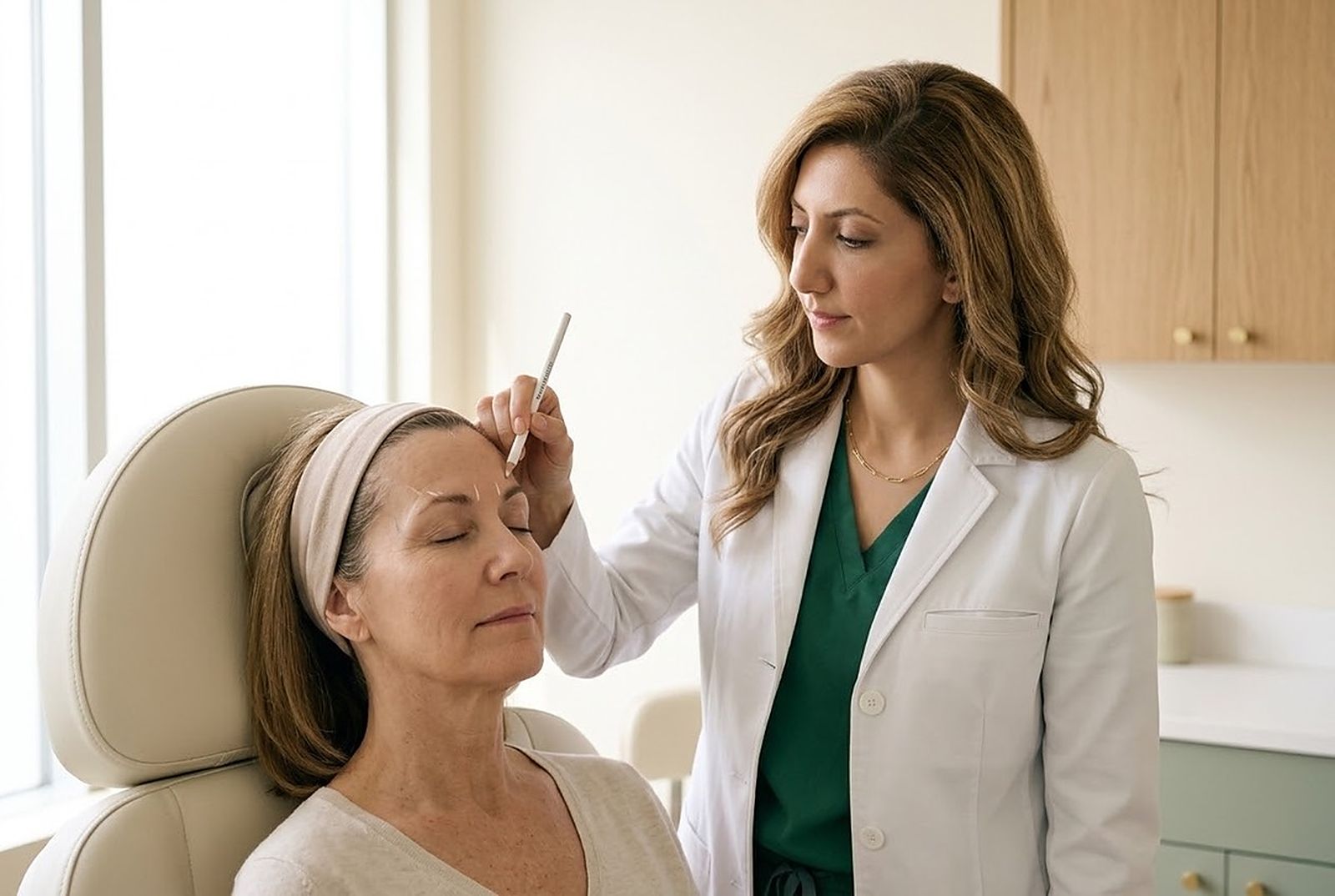
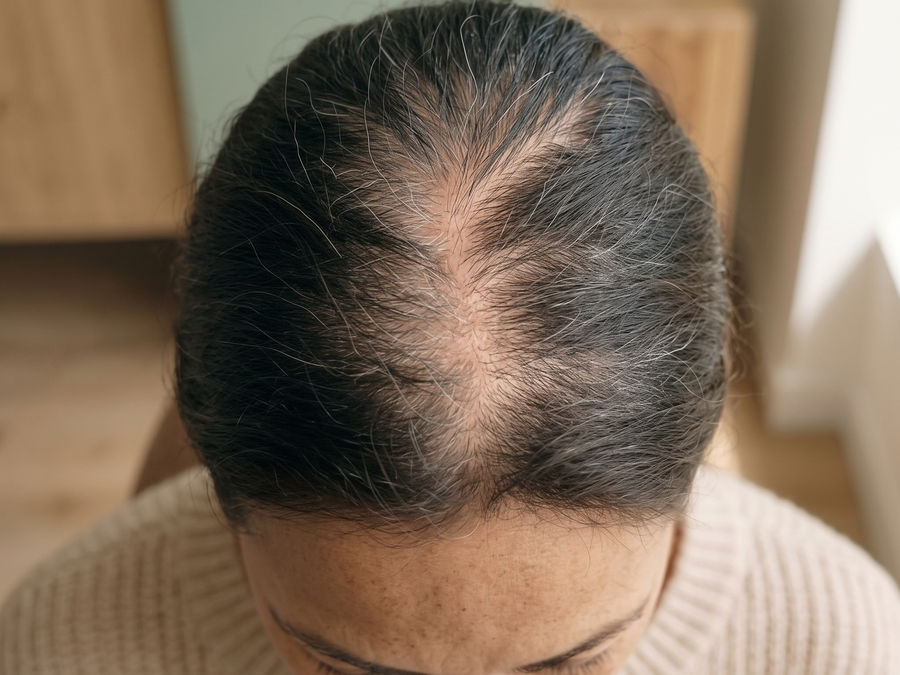
Platelet-rich plasma

RegenPRP, with the RegenLab system

Your own growth factors, prepared with the RegenLab system, for thinning hair and tired skin.

Treats
Thinning hair, under-eye hollows and dark circles, skin quality, melasma
Downtime
Tenderness for a day
Typical cost
$750 to $1,200 per session
Read the full guide

A plan for every scar type

Acne scars

Matched to each scar type

A plan matched to your scar types: subcision for rolling scars, TCA CROSS for icepick scars and Fraxel FTX for boxcar scars.

Treats
Rolling, icepick and boxcar scars, red and brown marks, raised scars
Downtime
None to about a week, by treatment
Typical cost
$250 to $1,800 per session, by treatment
Read the full guide

Rolling scars

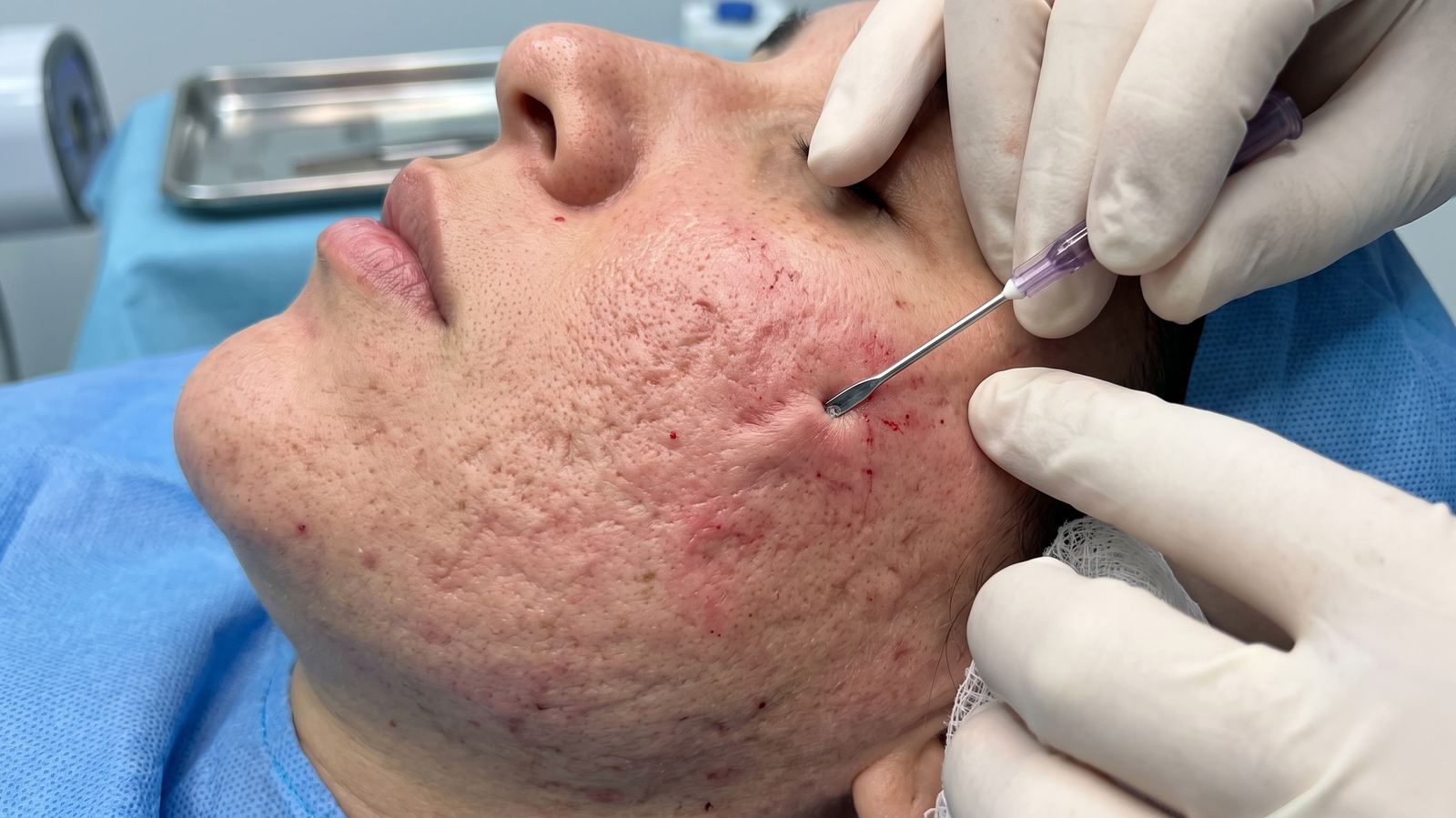
Subcision

Release of tethered and depressed scars

Releases the fibrous bands that tether a depressed scar to the tissue beneath it.

Treats
Rolling acne scars, tethered surgical scars
Downtime
Bruising and swelling, several days to a week
Typical cost
$500 per session, both cheeks or the full face $1,000
Read the full guide

Tone and texture

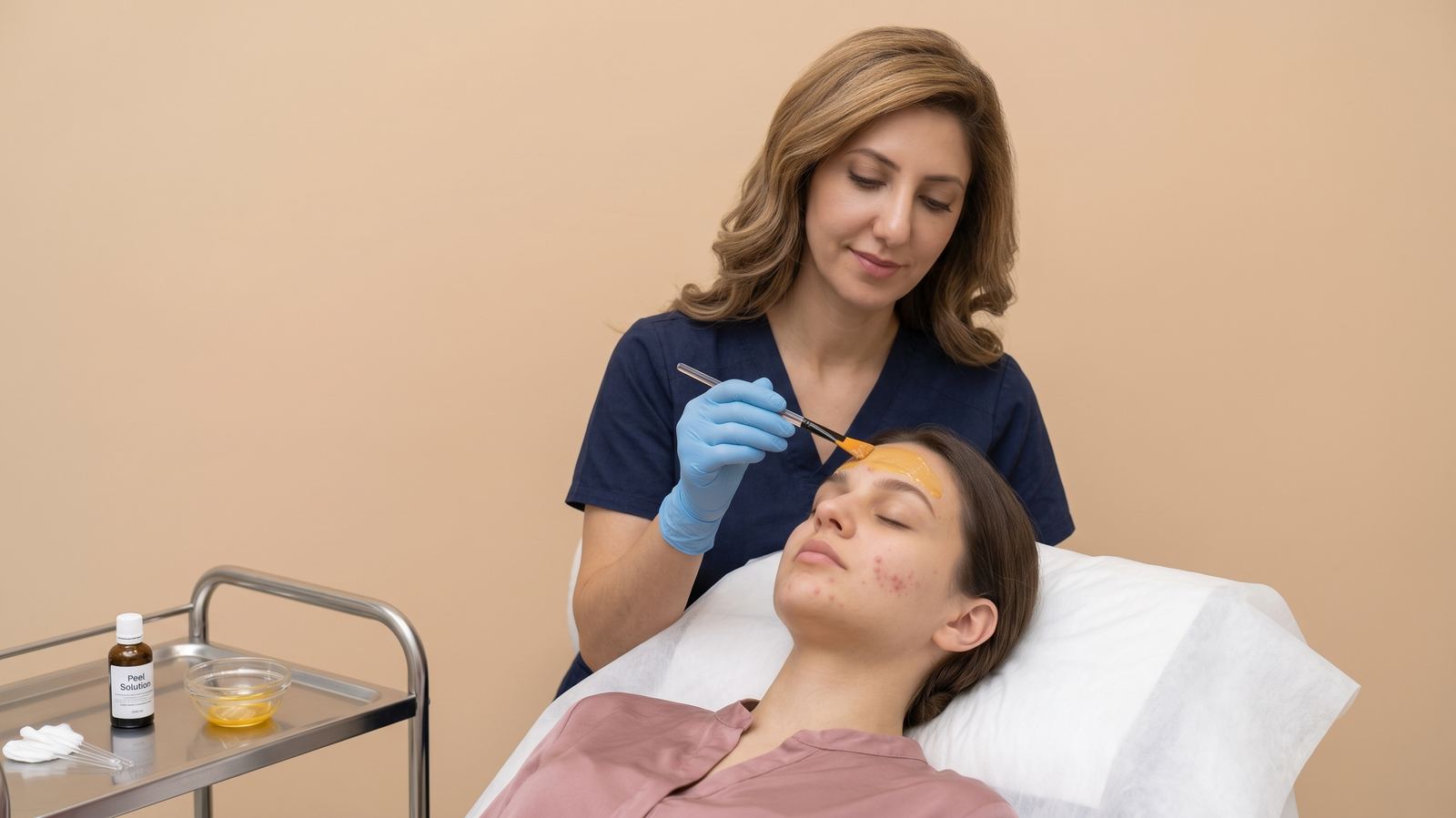
Chemical peels

Salicylic acid, Jessner's and TCA peels

Controlled exfoliation that improves tone and clears the precancerous damage sun leaves behind.

Treats
Uneven tone, sun damage, melasma, acne, actinic keratoses
Downtime
None to about a week, by depth
Typical cost
$250 to $500 per session, larger areas up to $1,000
Read the full guide

What to expect

How your results arrive.

Subcision and acne scar treatment rebuild collagen in your own tissue, so the change builds gradually rather than all at once. PRP builds over 3 to 6 months; a chemical peel shows sooner, within a week or two.

  1. Weeks 1 to 4

    Little to see yet. Beneath the surface, new collagen is already forming.

  2. Months 2 to 3

    Friends start telling you that you look rested. Nobody can say why.

  3. Months 4 to 6

    The full result, built from your own tissue, and it lasts.

How they work

Still from the animation: a cross-section of the scalp with full-size hair follicles at each side and shrinking, finer ones in the middle, beside a tube of separated platelet-rich plasma
How PRP works for thinning hair One minute, no sound
Read the steps

Why hair thins. In common hair thinning, follicles gradually shrink and produce finer, shorter hairs. The follicles are still alive, just under-performing, and that is what PRP aims to change.

  1. Draw. A small amount of your own blood is drawn, the same as a routine lab test.
  2. Concentrate. The blood is spun in a centrifuge, which separates and concentrates the platelets, the part of your blood that carries growth factors. We prepare it with the RegenLab system.
  3. Inject. The platelet-rich plasma is injected in small amounts across the thinning area, placing those growth factors right at the level of the follicles.
  4. Regrow. Over the following months the growth factors signal the follicles to re-enter their growth phase, so more hairs are actively growing and the area looks fuller. A series of sessions gives the best result.
Still from the animation: a fine needle passing just beneath a rolling scar to cut the bands that tether it down
How subcision lifts rolling scars One minute, no sound
Read the steps

Why rolling scars dip. Rolling acne scars are soft, wavy dips. Beneath each one, bands of scar tissue tether the skin down to the deeper layers, like stitches pulling from below.

  1. Numb. The area is numbed with a small injection of local anesthetic, so the procedure itself is comfortable.
  2. Release. A fine needle slides just beneath the scar and moves gently back and forth, cutting the bands that hold it down.
  3. Lift. Freed from the bands, the scar floor rises. The small pocket beneath fills with blood, your body's own scaffold for new collagen. Bruising for a week or two is normal.
  4. Rebuild. Over the following weeks new collagen fills the pocket and holds the skin up. Subcision pairs well with filler, PRP or Fraxel for an even smoother result.
Still from the animation: a drop of TCA placed at the base of a narrow, deep icepick scar, beside a boxcar scar and a rolling scar
How TCA CROSS treats acne scars One minute, no sound
Read the steps

Three kinds of acne scars. Acne scars come in three main shapes: narrow, deep ice pick scars; wider boxcar scars with sharp edges; and soft rolling scars tethered from below.

  1. Why ice pick scars. Ice pick scars are narrow but deep, so resurfacing alone cannot reach their base. TCA CROSS treats each one individually, right at the bottom.
  2. Apply. A tiny drop of high-strength TCA is placed at the base of each scar with a fine applicator. The scar walls frost white within seconds; the surrounding skin is untouched.
  3. Heal. A small crust forms and sheds within days. New collagen then fills the scar from the bottom up, so it becomes shallower with each session, spaced a few weeks apart.
  4. Stack. Treatments are stacked for the best result: TCA CROSS for ice pick scars, subcision and filler for rolling scars, and Fraxel for boxcar scars and overall texture.
Still from the animation: a cross-section of skin with the peel solution applied evenly across the surface, over the dull, pigmented outer cells
How chemical peels renew the skin One minute, no sound
Read the steps

What a peel does. The outer layers of skin collect dull, pigmented and unevenly textured cells. A chemical peel removes those layers in a controlled way so fresh skin can replace them.

  1. Choose the depth. The agent sets the depth. Salicylic acid and Jessner's solution work in the surface layer for texture, oil and mild discoloration; TCA reaches deeper for sun damage, pigment and fine lines.
  2. Apply. The skin is cleansed and degreased, then the solution is applied evenly. There is a warm, tingling sting for a few minutes; a TCA peel shows a light frost as it works.
  3. Peel. Over the following days the treated layers darken, tighten and flake away on their own, usually within a week for lighter peels. Let them shed; do not pull.
  4. Renew. Underneath is a smoother, more even surface. A series of peels, spaced several weeks apart, builds the result, and daily sunscreen protects it.