Lasers and energy

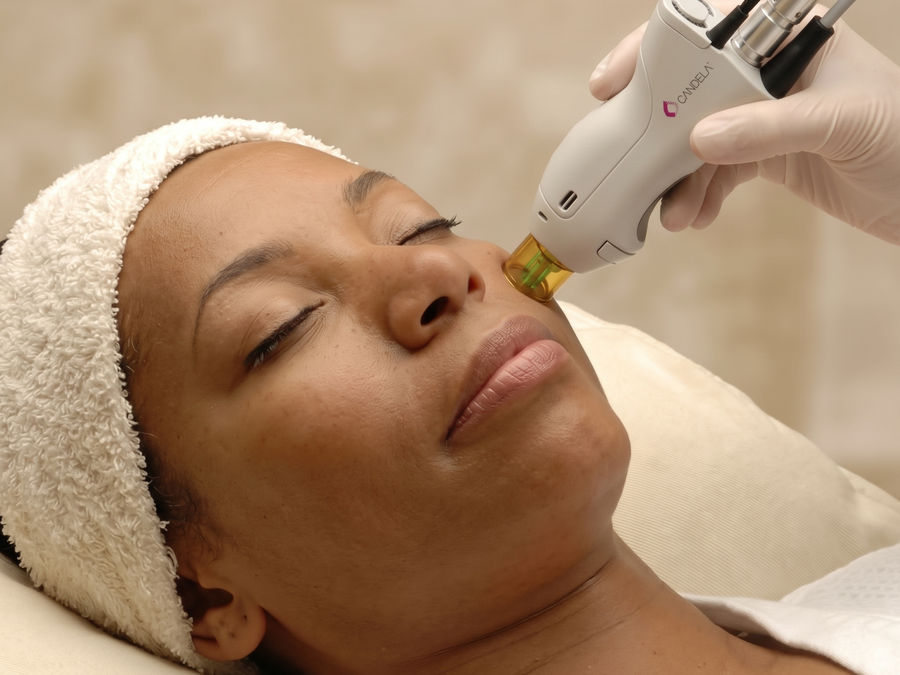
Three laser platforms, each chosen for what it does best: Fraxel FTX for sun damage, texture and scars, Vbeam Pro for redness and blood vessels, and GentleMax Pro for unwanted hair on every skin tone. An ablative laser joins them in early 2027. Every laser treatment is performed by Dr. Nawas herself.

The treatments

Each laser, matched to its target.

Fraxel FTX works in microscopic columns of the skin itself, Vbeam Pro's light is absorbed by the blood in vessels, and GentleMax Pro's mainly by the pigment in hair. That is why each one suits different concerns.

Resurfacing

Fraxel FTX

Fractional resurfacing, 1550 and 1927 nm

Treats pigment and texture at two depths in one session, with days of downtime rather than weeks.

Treats
Sun damage, brown spots, fine lines, scars, precancerous spots
Downtime
3 to 5 days of redness, then light flaking
Typical cost
$1,800 for a full-face treatment, other areas and combinations $750 to $2,500
Read the full guide

Redness and vessels

Vbeam Pro

Pulsed dye laser, 595 nm and 1064 nm

The current generation of the gold-standard vascular laser, with a second wavelength for deeper vessels.

Treats
Rosacea, flushing, broken capillaries, red scars, blue veins
Downtime
Up to a week of swelling, redness and possible bruising
Typical cost
$250 to $1,000 per session, by area
Read the full guide

Hair removal

GentleMax Pro

Alexandrite 755 nm and Nd:YAG 1064 nm laser

Two wavelengths in one platform, so hair removal is safe across the full range of skin tones.

Treats
Laser hair removal on all skin types, ingrown hairs, leg veins, sun spots
Downtime
Redness for a few hours
Typical cost
$250 to $1,300 per session, by area
Read the full guide

Deeper acne scars

Ablative laser: CO2 or erbium

Coming in early 2027

An ablative CO2 or erbium laser removes skin rather than heating it beneath the surface, so each session does more for deep scars, with more healing time than Fraxel. It arrives at ZN Dermatology in early 2027.

Downtime
About a week
Price
Published when it arrives
See how it works

How they work

Still from the animation: a cross-section of skin under the Fraxel FTX handpiece, with narrow columns of heat reaching into the dermis
How the Fraxel FTX laser works One minute, no sound
Read the steps

What sun and time leave behind. Years of sun and time leave fine lines, uneven pigment, scars and worn collagen, in both the surface layer and the deeper dermis.

  1. Glide. After numbing cream, the handpiece glides over the skin. Cool air flows through the tip to keep the treatment comfortable.
  2. Treat a fraction. The laser creates a pattern of microscopic heat columns, treating a fraction of the skin at a time: 1927 nm in the surface layer, 1550 nm deep into the dermis.
  3. Heal. Every column is surrounded by untouched skin, so healing is quick. The surface stays sealed, with no open wound.
  4. Renew. Over the next several days the treated cells are shed. Over the following weeks the skin builds fresh collagen, so tone evens out and texture smooths.
Still from the animation: a cross-section of skin under the Vbeam handpiece, with 595 nm yellow light absorbed by the blood vessels in the dermis
How the Vbeam vascular laser works One minute, no sound
Read the steps

Why skin looks red. Redness, rosacea and "broken capillaries" come from tiny blood vessels that have stretched open just beneath the surface of the skin.

  1. Cool. First, a burst of cooling spray chills the surface a split second before each pulse. It protects the skin and keeps the treatment comfortable.
  2. Target. Next, a pulse of 595 nm yellow light passes through the skin. Red blood absorbs that wavelength, so the energy lands in the vessel, not the surrounding skin.
  3. Seal. The absorbed light turns to heat inside the vessel. The vessel wall seals and collapses, while the skin around it is unharmed.
  4. Clear. Over the following weeks the body clears the sealed vessels on its own, and the redness fades.
Still from the animation: a cross-section of skin under the GentleMax Pro handpiece, with the laser light absorbed by the pigment in each hair
How the GentleMax Pro removes hair One minute, no sound
Read the steps

Where hair grows from. Each hair grows from a follicle rooted deep in the skin. Melanin, the pigment that gives hair its color, is concentrated in the hair shaft and its root.

  1. Cool. A burst of cryogen spray cools the surface a split second before each pulse, keeping the treatment comfortable.
  2. Target. The laser pulse passes through the skin and is absorbed by melanin in the hair, heating the follicle from inside. 755 nm suits lighter skin; 1064 nm reaches deeper and suits darker skin tones.
  3. Disable. That heat disables the follicle's ability to grow hair, while the surrounding skin is unharmed. The treated hairs shed over the following weeks.
  4. Why a series. Only hairs in their active growth phase respond, and only some follicles are growing at any one time. A series of sessions, spaced weeks apart, catches each follicle in turn.
Still from the animation: a cross-section of skin under an ablative laser handpiece, with microscopic columns of skin vaporized and open at the surface, and intact skin between them
How ablative laser resurfacing works One minute, no soundComing to ZN Dermatology in early 2027.
Read the steps

Ablative versus non-ablative. An ablative laser removes tissue rather than just heating it. Its light is absorbed by water, so each pulse vaporizes a tiny column of skin: the strongest tool for deep scars and lines.

  1. Prepare. The skin is numbed thoroughly, with topical anesthetic and local injections when needed. Depth and density are matched to the problem.
  2. Ablate. Each pulse vaporizes a microscopic column, open at the surface, with a thin zone of heat around it that tightens existing collagen. Skin between the columns stays intact.
  3. Heal. The open channels ooze, swell and crust for a few days, with careful wound care. New skin closes each channel from the intact skin beside it, usually within a week.
  4. Rebuild. Redness fades over weeks. Beneath the surface, new collagen builds for months, so scars soften and skin tightens. One session often achieves what would take several non-ablative sessions.